
Skin Cancer Unit
Advanced skin cancer treatment in Brussels


Dermatologists specialising in
Skin cancer diagnosis
At Dermatology & Research Institute, in Brussels (Uccle), we approach skin cancer through comprehensive care, combining medical expertise, state-of-the-art technology and the Grupo Pedro Jaén model of clinical excellence. Our team of dermatologists specialising in skin cancer is highly qualified in the early diagnosis and personalised treatment of each case.
Vectra 360
Total-body mapping for the early detection of skin cancer.
Confocal microscopy
Diagnosis and monitoring of skin lesions, in many cases without the need for biopsy.
Digital dermoscopy
Helps differentiate between benign and malignant skin lesions.
Skin cancer prevention
Mole monitoring and early diagnosis
Treatment of skin cancer and premalignant lesions
Basal cell carcinoma
Squamous cell carcinoma
Melanoma
Other types of skin cancer
Actinic keratosis

What it is, diagnosis and treatment
Information about skin cancer
Skin cancer is one of the most common diseases worldwide and is characterised by the abnormal and uncontrolled growth of skin cells. It represents a growing concern in dermatology, both because of its high incidence and because of its potential severity if it is not diagnosed in time.
Although its frequency varies between countries, it is estimated that millions of people are affected each year by some form of skin tumour, with basal cell carcinoma being the most common. Melanoma, although less frequent, is more aggressive and requires prompt, specialised care.
At DR Institute Brussels, a Grupo Pedro Jaén clinic, we apply a model of clinical excellence that allows us to offer early diagnosis and advanced treatments. Thanks to the use of state-of-the-art technologies and the experience of our skin cancer specialists, we can detect and treat lesions at very early stages, significantly improving prognosis and cure rates.
Abordaje integral y cuidado de la estética
At Dermatology & Research Institute, we approach skin cancer comprehensively, combining diagnostic precision, personalised treatment and advanced dermatological surgery. Our specialised unit has access to highly innovative technology and benefits from the scientific and clinical expertise that characterises Grupo Pedro Jaén, an international reference in oncological dermatology.
From prevention through systematic check-ups to surgical and pharmacological treatment, our team offers solutions adapted to each type of skin tumour. We place particular emphasis on early detection, which is essential for improving prognosis, and on aesthetic care or reconstruction when required, especially when cancer appears in exposed areas such as the face, neck or décolletage.
This comprehensive approach allows us not only to remove the tumour with maximum safety, but also to address the functional and aesthetic aspects that directly influence the patient’s quality of life.
Types of skin cancer, diagnosis and prevention
The skin is made up of different layers and cell types. Depending on the location and the type of cell in which the abnormality originates, three main types of skin cancer are usually distinguished: basal cell carcinoma, squamous cell carcinoma and melanoma. There are also other less frequent cutaneous neoplasms which, in general, tend to behave more aggressively or present with less obvious symptoms. This can make early detection more difficult and negatively affect prognosis if they are not identified and treated promptly.
At Grupo Pedro Jaén Brussels, we are strongly committed to integrating high-precision diagnostic tools that support clinical decision-making in each case. We have advanced dermatological imaging technologies that allow skin tumours to be detected, classified and monitored at early stages, a key factor in improving treatment options and disease progression. This multidisciplinary and technology-based approach reinforces our commitment to being a specialised skin cancer centre in Belgium.
Skin cancer is one of the most common types of cancer, but it is also one of the most preventable and has a better prognosis when diagnosed early. Sun protection, regular dermatological check-ups and monitoring changes in the skin are essential pillars for reducing risk and acting early when there is any suspicion.
Skin Cancer Treatment
Skin cancer includes a wide variety of tumours with relevant differences in biological behaviour, prognosis and clinical management. For this reason, at DR Institute (Grupo Pedro Jaén Brussels), each case is studied individually, assessing both the characteristics of the tumour and the personal circumstances of each patient.
A personalised approach
- We select the most appropriate treatment by taking into account:
- The type and extent of the tumour, its depth, location and whether it has developed on previous lesions.
- The patient’s clinical and personal circumstances, such as age, general health and aesthetic expectations.
- The experience of the medical team, which makes it possible not only to choose the most appropriate therapy, but also to anticipate potential complications and manage functional or aesthetic sequelae.
In our specialised Skin Cancer Unit in Brussels, we apply state-of-the-art techniques to offer effective, safe and minimally invasive solutions within the Grupo Pedro Jaén model of excellence. Some of the main therapeutic options are as follows:
Curettage and electrocautery
A fast and effective procedure for superficial lesions, such as low-risk basal cell carcinomas or actinic keratoses. It consists of scraping the lesion and applying electrical current to destroy the affected tissue.
Cryotherapy
Controlled freezing with liquid nitrogen, indicated for superficial carcinomas or precancerous lesions. It may leave a scar, so it is selected according to the location of the lesion.
Dermatological laser
Used to remove precancerous lesions and some superficial tumours. It allows precise treatment while preserving healthy tissue.
Topical treatments
Application of immunomodulatory or chemotherapeutic creams, particularly useful in visible areas of the body. Treatment is carried out at home under medical supervision, with specific instructions to minimise side effects.
Radiotherapy
Although it is not usually the first option, radiotherapy may be used when surgery is not feasible or as a complementary treatment in uncommon melanomas. It may also be indicated in advanced stages to relieve symptoms.
Chemotherapy
- Topical: direct application to the skin in superficial lesions.
- Systemic: oral or intravenous administration for more advanced cases with tumour spread.
Conventional surgery with widened margins
Complete excision of the tumour with a portion of healthy skin as a safety margin. The size of the margin depends on the location and type of tumour.
Mohs surgery
A highly precise surgical technique that allows the tumour to be removed layer by layer, with each section assessed under the microscope in real time. It is particularly indicated in visible areas such as the face, as it combines a high cure rate with maximum preservation of aesthetic and functional structures.
Frequently asked questions
How does skin cancer appear?
Skin cancer may appear as a wound that does not heal, a new mark or a mole that changes shape, size or colour over a short period of time. Although these signs are non-specific, they should be assessed early. For this reason, we recommend seeing a dermatologist if any suspicious change appears and undergoing an annual check-up, including areas that are difficult to examine yourself.
Can skin cancer develop without sun exposure?
Although sun exposure is one of the main risk factors, other elements also play a role, such as genetic predisposition, fair skin phototype or the presence of congenital or numerous moles. In addition, intense sun exposure during childhood or adolescence may have consequences years later, even in people who no longer regularly expose themselves to the sun.
How serious can skin cancer be?
This depends on the type of tumour. Basal cell carcinoma is the most common and usually grows slowly, with no tendency to spread. Squamous cell carcinoma may, in rare cases, spread to other organs if it is not treated in time. Melanoma, although less common, is potentially the most aggressive and can be life-threatening if not detected early.
Regardless of prognosis, skin tumours can also affect visible and functional areas of the body, such as the lips, eyelids, cheeks or nose, causing sequelae that may affect both appearance and basic functions such as speaking, chewing or seeing.
What is the most aggressive type of skin cancer?
Among the most common skin tumours, melanoma is notable for its aggressiveness. There are also less common types, such as Merkel cell carcinoma, which have a more severe clinical behaviour.
Should I be concerned about basal cell carcinoma?
Although basal cell carcinoma usually follows a benign course and rarely metastasises, it should not be underestimated. If not treated in time, it can spread locally and affect deep structures such as mucous membranes or even intracranial regions, particularly when it appears in delicate areas of the face.
What is the difference between basal cell carcinoma and squamous cell carcinoma?
Basal cell carcinoma originates in the basal cells of the epidermis, whereas squamous cell carcinoma originates in the squamous cells. Both are common and treatable, but they may cause complications if they affect functional areas or if their progression is not properly controlled.
What risks does squamous cell carcinoma involve?
Its ability to metastasise is low, but it has a high rate of local invasion. This may cause tissue destruction, scarring or deformities, requiring complex treatments or reconstructive surgery.
What is a precancerous skin lesion?
Precancerous skin lesions are skin changes with the potential to develop into skin cancer if not monitored. The most common is actinic keratosis, which is associated with chronic sun exposure. Early detection and treatment are essential.
How long can I wait before surgery?
The waiting time depends on the type of tumour and its behaviour, but in general, surgery should be considered a priority. Some skin tumours progress rapidly, so delaying treatment may negatively affect prognosis. The appropriate timeframe depends on the type of tumour, its biological behaviour and the characteristics of each patient. In general, surgery should be assessed as a priority, especially in melanomas or other aggressive tumours. The dermatologist will indicate the most appropriate timing according to the diagnosis and the risk of progression.

Dermatologists specialising in skin cancer
We have a highly specialised medical team with extensive experience.
Where we see patients
Clinic in Brussels
Dermatology & Research Institute is located at 835 Chaussée de Waterloo, opposite the Bois de la Cambre, in the Uccle district of Brussels. We bring together clinical dermatology, advanced aesthetic medicine and biomedical research in a single centre. Our commitment to the Grupo Pedro Jaén model of clinical excellence positions us as a specialised reference centre in Belgium.

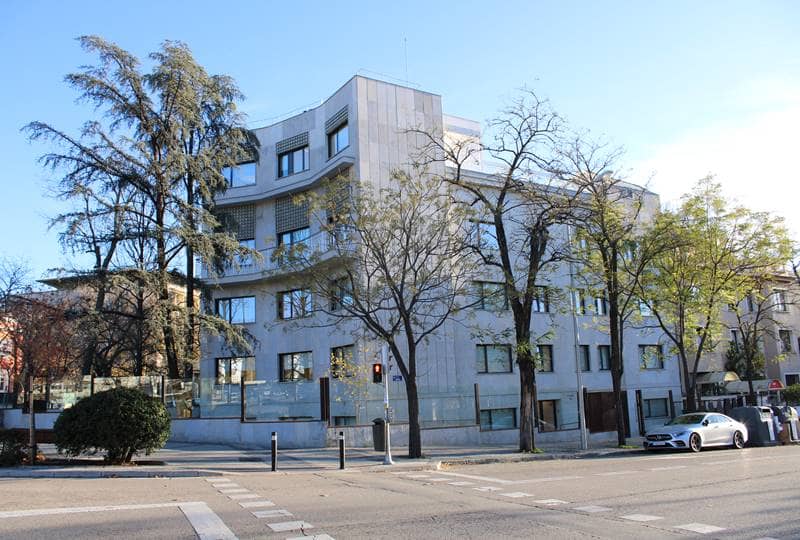
Grupo Pedro Jaén Brussels
At DR Institute, we offer advanced services in clinical and aesthetic dermatology, hair disorders, diagnosis and treatment of skin cancer, laser treatments and other specialties related to skin health.
We are open Monday to Saturday, from 09:00 to 20:00.
We are located at Chaussée de Waterloo 835, 1180 Uccle, Brussels, Belgium.